The Arabic Letter That Started a Revolution (And Why Your Kid Should Know About It)
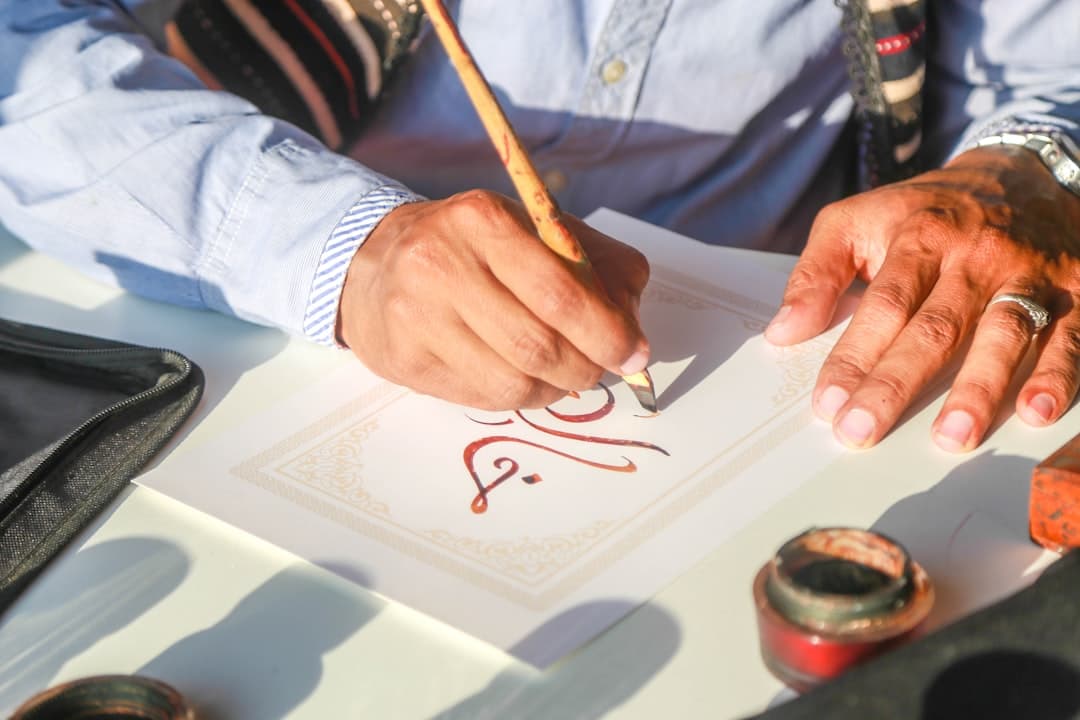
Photo by Oussama Abouchatir on Unsplash
My nephew Kareem came home from Saturday school last week asking why some Arabic letters look "angry" and others look "happy." His teacher had been showing the class how the letter ﺡ (ḥāʾ) changes shape depending on where it sits in a word, and apparently, Kareem decided the isolated form looked grumpy.
Kids notice everything, don't they?
But his innocent observation got me thinking about one of the most controversial letters in Arabic history — one that literally split the Islamic world and sparked debates that lasted centuries. And no, it's not the one Kareem thought looked angry.
The Dot That Changed Everything
The letter in question is ن (nūn), and its story begins in the 7th century when Arabic was first being written down systematically. Back then, Arabic script was what scholars call "defective" — it didn't have the little dots and marks we see today.
Imagine trying to read Arabic without any vowel marks or dots to distinguish between letters. ب ت ث all looked identical. ج ح خ were indistinguishable. It was like reading English with half the letters missing.
The introduction of dots (called i'jām) was revolutionary, but it also created a massive problem: whose version of Arabic was "correct"?
When Scholars Fought Over Dots
Here's where it gets interesting for us diaspora families. The systematic addition of dots to Arabic letters wasn't just a linguistic decision — it was deeply political and religious.
Different regions had different dialects. The Hijazi Arabs spoke differently from the Tamimi tribes. The people of Basra had their own way of pronouncing certain letters. When scholars started adding dots to standardize the script, they had to choose which dialect would become the "standard."
The letter ن became a flashpoint because its pronunciation varied significantly across regions. Some pronounced it with a heavy nasal sound, others lighter. The decision of where to place that single dot above the letter — and how to teach its pronunciation — sparked debates in scholarly circles from Baghdad to Córdoba.
What This Means for Your Saturday School Student
I know what you're thinking: "Deepy, this is fascinating, but my kid can barely remember which way Arabic reads, let alone care about medieval dot debates."
But here's why this matters for your heritage language learner.
Every time your child writes the letter ن, they're participating in a tradition that thousands of scholars fought to preserve and standardize. That little dot above the letter represents centuries of people who cared enough about Arabic to argue over the tiniest details.
When I watch kids in our Arabic classes at ta3allam.org struggle with letter recognition, I remind them that every Arabic letter has survived countless attempts at standardization, colonization, and modernization. These letters are tough — they've been through worse than a 9-year-old's homework session.
The Practical Magic of Arabic Letters
The ن story also reveals something beautiful about Arabic that your kids might not realize: the script is incredibly adaptable.
Unlike English, where each letter has basically one form, Arabic letters are shape-shifters. The ن your child writes at the beginning of a word (نور) looks completely different from the one in the middle (منزل) or at the end (لبن).
This isn't a bug — it's a feature. Arabic letters were designed to flow together, to create visual harmony on the page. When calligraphers talk about Arabic script being like music made visible, this is what they mean.
Teaching the Story Behind the Letters
Next time your child complains about Arabic being "too hard," try this: pick one letter and tell them its story.
Tell them about ن and the scholars who argued over its dot. Show them how ج looks like a little boat (my favorite way to remember it). Explain why ع is called the "difficult letter" — because even native speakers sometimes struggle with its pronunciation.
Make each letter a character in your family's Arabic learning story. Kids remember stories better than rules anyway.
At our last community iftar, I watched a group of teenagers comparing their Arabic handwriting, debating whether their ن letters looked "proper." These same kids who usually groan about Saturday school were suddenly invested in getting their letter forms right.
That's the power of knowing the why behind the what.
The Revolution Continues
The Arabic alphabet revolution didn't end with medieval scholars and their dots. It continues every time a diaspora parent decides to teach their child Arabic, every time a heritage language teacher introduces a new letter, every time a kid like Kareem notices that letters have personalities.
Your child learning to write ن isn't just practicing penmanship — they're joining a conversation that's been going on for 1,400 years.
That cranky-looking ح that started this whole reflection? It's been making that same "grumpy" face since the 7th century, and it's still here, still teaching diaspora kids how to connect with their roots.
Ready to let your kids in on the secret stories behind every Arabic letter? Head over to ta3allam.org and explore our alphabet adventures — where every letter comes with the history that makes it unforgettable.