The Real Story Behind Your Grandmother's Armenian Easter Bread
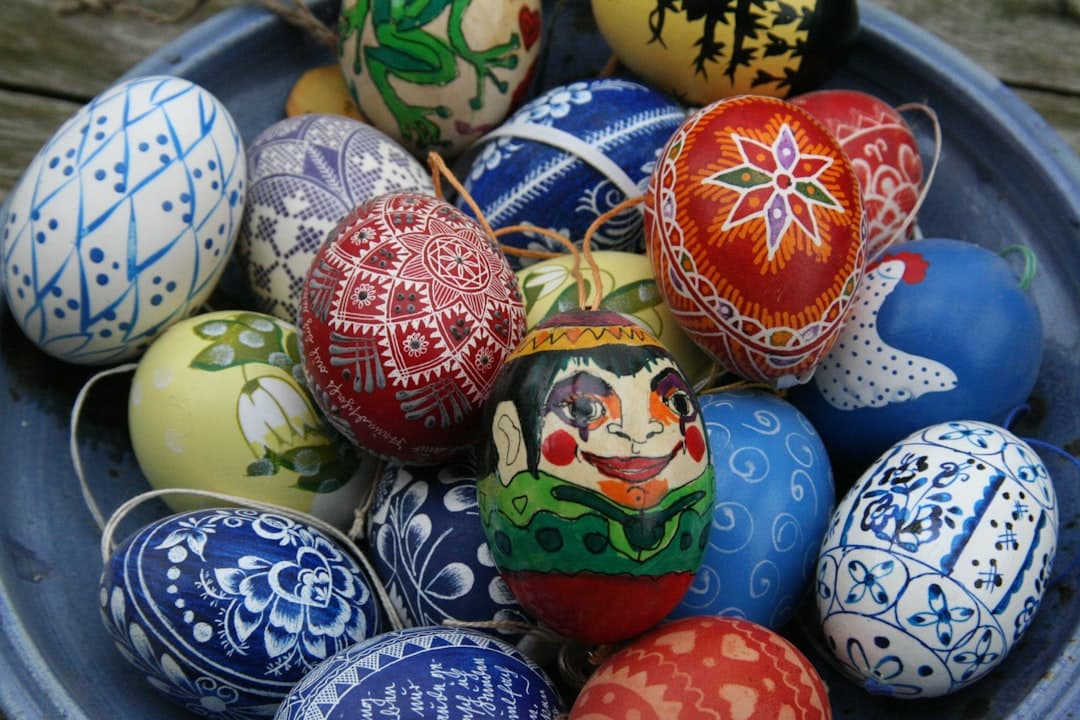
Photo by Bee Felten-Leidel on Unsplash
My grandmother never called it "Armenian Easter bread." She just said "chorek" with that slight eye roll reserved for Americans who needed everything explained in English.
I was twelve when I finally asked why we twisted the dough into those elaborate braids. "Because that's how you make chorek," she said, flour dusting her apron. Not exactly the deep cultural explanation I was looking for.
It wasn't until years later, teaching my own kids to braid the sweet, mahlab-scented dough, that I understood what she really meant.
More Than Just Sweet Bread
Chorek isn't just Easter bread — it's Armenian DNA wrapped in dough.
Those intricate braids your grandmother insisted on? They're not decorative. They're defiant. Every twist represents the interweaving of Armenian families who scattered across the globe but refused to let their traditions die.
The recipe itself tells our story. Mahlab, that distinctive cherry pit spice that makes chorek taste like nothing else, had to be smuggled in suitcases for decades. Mastic, the pine-scented resin that gives the bread its unique chew, came from Greek islands when Armenian stores couldn't stock it.
Our ancestors literally baked resilience into this bread.
The Secret Language of Ingredients
Walk into any Armenian grandmother's kitchen during Easter prep, and you'll hear the real names for things.
Mahlab isn't "ground cherry pits" — it's mahleb, and if you can't find it at the Middle Eastern store, you call your cousin in Glendale. Mastic isn't "pine resin" — it's mastiha, and yes, it's expensive, but you use it anyway because some things are worth the cost.
The eggs? They're not just for richness. In Ottoman times, eggs were luxury. Adding six eggs to one batch of bread was a statement: we're still here, we're still celebrating, and we're not just surviving — we're thriving.
Even the orange zest has meaning. Citrus represented hope for spring, for new growth, for another year of keeping our traditions alive despite everything trying to erase them.
Why the Braiding Matters
Here's what your grandmother probably didn't tell you: those braids are a language.
The three-strand braid represents the Trinity, yes, but also the three branches of Armenian Christianity that somehow stayed connected across continents. The six-strand braid that takes forever to master? That's the six Armenian provinces, woven together in memory.
My kids used to complain about the braiding. "Why can't we just make regular bread?" Because regular bread doesn't carry 1,500 years of Armenian stubbornness, that's why.
Now they get it. Last Easter, my daughter spent an hour perfecting her six-strand braid, muttering Armenian counting under her breath the way I taught her. She didn't know she was speaking the language of her great-great-grandmother's kitchen.
The Recipe That Survived Everything
Want to make chorek that actually tastes like your grandmother's? Stop looking for shortcuts.
The Real Chorek Recipe (not the Pinterest version):
- 4 cups all-purpose flour
- 1 cup whole milk, warmed
- 1/2 cup sugar
- 6 large eggs
- 1/2 cup melted butter
- 2 teaspoons active dry yeast
- 1 teaspoon ground mahlab (don't substitute)
- 1/2 teaspoon ground mastic
- Zest of 1 orange
- 1 teaspoon salt
The method matters more than the measurements.
Dissolve the yeast in warm milk with a pinch of sugar. Let it foam — if it doesn't foam, start over. Mix the eggs with sugar until pale. Add the mahlab, mastic, and orange zest to the flour.
Combine everything and knead for 15 minutes by hand. Yes, by hand. The dough should be smooth and elastic, slightly sticky but not wet. Let it rise until doubled, punch it down, and let it rise again.
Here's the part everyone gets wrong: divide the dough into six equal pieces. Roll each into a rope as long as your forearm. Braid them like you're braiding hair, tucking the ends under.
Brush with beaten egg, sprinkle with sesame seeds if you have them, and bake at 350°F until golden brown and hollow-sounding when tapped.
Teaching Kids the Why, Not Just the How
When I teach chorek-making at our Armenian school, I don't start with measurements. I start with stories.
I tell them about grandmothers who hid recipe cards in coat linings when they fled their villages. About mothers who taught their daughters to braid dough in refugee camps. About families who made chorek in tiny American apartments, filling tenements with the smell of mahlab and homesickness.
The kids always want to know why it takes so long, why we can't just buy it at the store. Because anyone can buy bread, I tell them. Only we can make chorek.
More Than a Recipe
Your grandmother's chorek recipe isn't just instructions for making bread. It's a masterclass in cultural preservation disguised as baking.
Every time you make it, you're speaking Armenian without words. You're keeping alive the taste memories of people who risked everything to make sure you could stand in your kitchen, flour on your hands, teaching your own kids to braid dough like their great-grandmother did.
So the next time someone asks why you don't just buy Easter bread from the store, tell them what my grandmother should have told me: because some things are too important to trust to strangers.
Try making chorek with your kids this week — and don't you dare use the bread machine. Some traditions deserve the full fifteen minutes of kneading, the hour of waiting for the rise, the careful braiding that connects your kitchen to every Armenian kitchen that came before it.