My Kid Speaks Three Languages But Won't Order Shawarma in Arabic
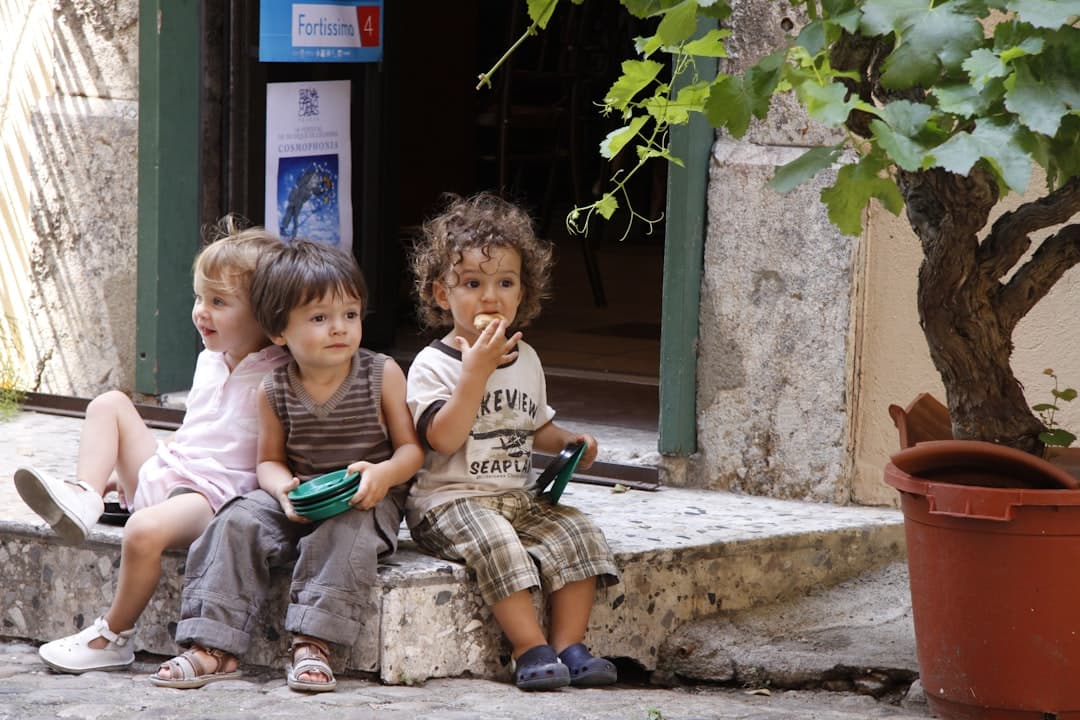
Photo by Andries Meijer on Unsplash
My friend Layla texted me yesterday: "Nour corrected my Arabic grammar during dinner, then refused to order her own food at the Lebanese restaurant because she was 'too embarrassed' to speak Arabic to the waiter."
Sound familiar?
I see this everywhere in our diaspora communities. Kids who can recite Arabic poetry at home suddenly develop selective mutism at the halal market. Children who argue with their Armenian grandfather in perfect Eastern Armenian claim they "don't know how" when their teacher asks them to share something in their heritage language.
It's not about ability. It's about confidence, identity, and something researchers call "linguistic anxiety."
Why Smart Multilingual Kids Suddenly Go Silent
Dr. Ellen Bialystok's research at York University shows that multilingual children often compartmentalize their languages by context and emotional safety. Your child isn't being stubborn when they refuse to speak Arabic at the grocery store — they're protecting themselves from judgment.
Here's what's really happening in their minds:
Fear of accent judgment. Your daughter knows her Arabic is accented differently than the Syrian cashier's. She's hyperaware that people might identify her as "not really Arab enough."
Code-switching confusion. At home, mixing English and Armenian feels natural. In public, they worry about seeming "unprofessional" or "uneducated."
Identity performance anxiety. Speaking Greek publicly feels like claiming an identity they're not sure they deserve. What if someone asks where they're "really from"?
The research is clear: this isn't a language problem, it's a confidence problem.
The "Heritage Shame" Spiral
I call it the heritage shame spiral, and it looks like this:
Child feels uncertain about heritage language → Avoids using it publicly → Skills atrophy from lack of practice → Feels even less confident → Avoids it more
Meanwhile, parents get frustrated and either push harder (making the anxiety worse) or give up entirely.
But here's what UCLA's Center for Near Eastern Studies found: children who use their heritage language confidently in public settings by age 10 are 73% more likely to maintain fluency into adulthood.
The window matters.
Building Public Language Confidence (Without the Drama)
Start with low-stakes practice. Before hitting the busy Lebanese restaurant, practice ordering at the drive-through where nobody sees your face. Success in private builds courage for public moments.
Model imperfect heritage language use. Let your kids hear you stumble over words, laugh at mistakes, code-switch naturally. When they see you're not performing perfection, they'll stop expecting it from themselves.
Create "heritage language zones" in public. Tell your child that in this specific aisle at the Middle Eastern grocery store, or during coffee after Greek school, you'll only speak the heritage language together. Making it a game removes the performance pressure.
Celebrate public heritage language use. Not with over-the-top praise that feels fake, but with genuine acknowledgment. "I loved hearing you help that lady find the za'atar. Your Arabic made her whole day."
The Grocery Store Game-Changer
Here's my favorite strategy, borrowed from bilingual families in Montreal:
Turn heritage language shopping into detective work. Send your child to find three items using only the heritage language. Give them permission to point, gesture, even draw pictures if needed. The goal isn't perfect pronunciation — it's using the language as a tool that works.
When Nour successfully communicates "I need the big bag of rice" in Arabic, even if she had to repeat herself twice, she's building real-world language confidence.
What About Peer Pressure?
Last month, a parent told me her 8-year-old stopped speaking Armenian at school pickup because a classmate asked why she talks "weird."
Here's where parents need to get strategic, not just supportive.
Prep them for the questions. Role-play responses to "Why do you speak that?" Give them simple, proud answers: "It's Armenian, my family's language" or "I speak three languages."
Find their heritage language crew. Connect with other families raising multilingual kids. When children see peers who also speak heritage languages confidently, it normalizes the experience.
Address the "weird" directly. Explain that speaking multiple languages is actually a superpower that most people wish they had. Frame questions as curiosity, not judgment.
The Long Game
Remember: the goal isn't raising a child who speaks perfect heritage language in every public setting. The goal is raising someone who sees their multilingual ability as an asset, not a source of shame.
Some weeks your kid will order in Arabic confidently. Other weeks they'll whisper their grocery list to you in English. Both are okay.
What matters is that they know their heritage language belongs in the world, not just at home.
Ready to help your multilingual child embrace their heritage language confidence? Try the grocery store detective game this week and tell us how it goes in the DiasporaLearn community. Your success stories help other families navigate this same challenge.